Explore Opportunities in Insurance & Pharmaceuticals - View Openings
March 16, 2026

The Indian pharmaceutical market, historically the global powerhouse of high-volume branded generics, has reached a structural breaking point in 2026. For decades, the industry standard was the "Generalist" Medical Representative (MR)—a professional tasked with detailing broad-spectrum antibiotics, generic analgesics, and standard acute therapies to thousands of standalone General Practitioners across Tier 1, 2, and 3 cities. Today, that high-footfall, relationship-only model is rapidly approaching obsolescence.
Top-tier multinational corporations (MNCs) operating in India, alongside domestic giants like Sun Pharma, Cipla, and Dr. Reddy's, are aggressively reallocating their sales operations away from low-margin, high-volume generic drugs. The growth engines of 2026 are complex, chronic, and specialty therapeutic areas: Oncology, Immunology, Rare Diseases, Advanced Biologics, and specialized Cardio-Metabolic care. For the modern Indian Medical Representative, this industry pivot presents a stark reality: adapt and specialize, or face stagnant wages, shrinking territory sizes, and limited career mobility.
To understand why generalist roles are hitting a ceiling, one must look at the underlying economics and regulatory pressures unique to the Indian healthcare market. Over the last several years, the National Pharmaceutical Pricing Authority (NPPA) and strict Drug Price Control Orders (DPCO) have severely compressed the profit margins on essential and standard acute medicines. When margins shrink, companies cannot afford to maintain massive, thousands-strong field forces just to maintain market share against a dozen identical generic competitors.
Conversely, specialty therapeutics and complex biosimilars command premium pricing due to their intensive research cycles and targeted efficacy. When a pharmaceutical company launches a new targeted immunomodulator in the Indian market, they do not need a field force of five thousand reps to blanket every district. They need a highly elite, specialized tactical team. These "Therapeutic Area Specialists" or "Key Account Managers" are tasked with engaging a very narrow, highly educated pool of Indian specialists—medical oncologists, neurologists, and rheumatologists. Because the revenue generated per prescription in these segments is exponentially higher, the professionals who can successfully close these clinical conversations command significantly higher CTCs, uncapped incentive structures, and accelerated paths to Zonal and Regional Leadership.
The pivot to specialty care is intrinsically linked to the technological advancements defining the current Indian medical era. With the widespread rollout and adoption of the Ayushman Bharat Digital Mission (ABDM) and the normalization of electronic health records (EHR) across urban centers, Indian specialists are increasingly utilizing predictive AI diagnostics and algorithmic treatment pathways. A Medical Representative relying solely on a traditional printed visual aid and a repetitive feature-benefit pitch cannot survive in this environment.
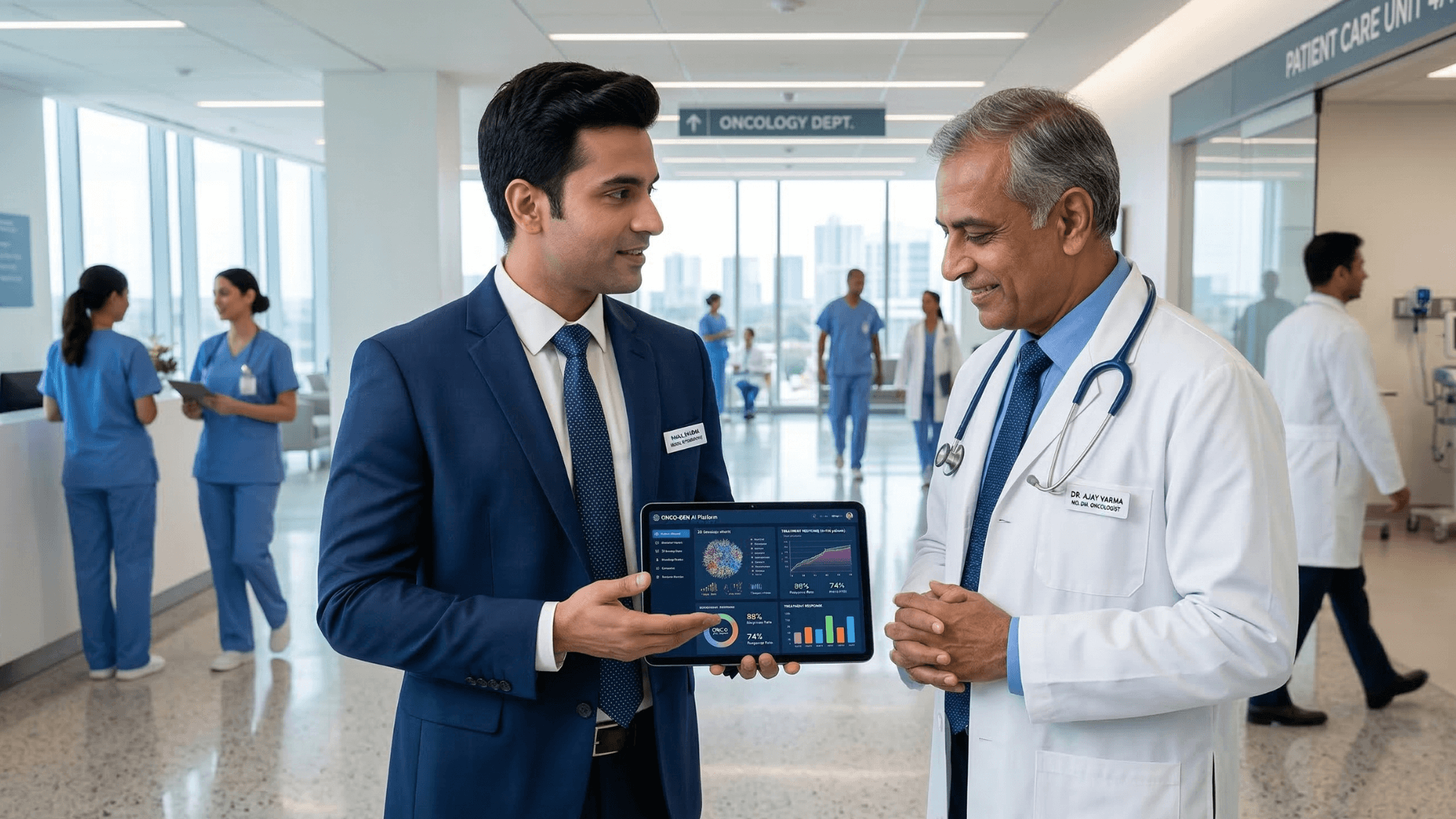
In 2026, the elite pharmaceutical consultant must understand how their molecule interacts with these new digital clinical decision support systems. They must be fluent in data. When an oncologist at a top metro hospital reviews a predictive pathology report generated by an AI model, the specialized MR must be capable of discussing how their specific targeted therapy aligns with those genomic findings. Furthermore, the rise of Digital Therapeutics (DTx) in India requires sales professionals to understand both pharmacology and software integration. The conversation has evolved from "Here is what my drug does" to "Here is how our molecule, combined with digital patient-monitoring, will improve your clinic's outcome metrics and patient compliance."
For ambitious professionals currently working in general healthcare or acute divisions, transitioning into specialty therapeutics requires a deliberate and aggressive strategy. Relying solely on tenure and a good relationship with local chemists will not secure a seat at the specialty table.
The barrier to entry for specialty divisions is clinical fluency. Candidates must voluntarily upskill beyond the basic product training provided by their current employers. This means learning how to critically analyze and present complex clinical trial data, understanding Kaplan-Meier survival curves, and grasping the fundamentals of targeted therapies. When interviewing for a specialty role in India, hiring managers and medical affairs directors will aggressively test your ability to hold a peer-to-peer scientific discussion, not just your ability to memorize a pitch.
Specialty sales rarely rely on the traditional single-doctor standalone clinic model. High-value therapeutics are predominantly prescribed within massive corporate hospital networks like Apollo, Max, Fortis, and Narayana Health, as well as specialized government tertiary care centers. Candidates must transition their mindset from localized "Territory Management" to institutional "Key Account Management." This involves understanding complex hospital procurement cycles, navigating strict formulary committees, and building relationships with multiple stakeholders, including department heads, hospital pharmacists, and corporate procurement officers. Demonstrating a track record of successfully navigating institutional sales within the Indian healthcare ecosystem is a massive differentiator in the 2026 job market.
The most lucrative specialty roles—those launching first-in-class biologics or heading new oncology divisions for MNCs entering the Indian market—are rarely advertised on public job boards like Naukri or LinkedIn. Pharmaceutical companies handle these high-stakes hires with extreme confidentiality to protect their launch strategies from domestic competitors. They rely on specialized recruitment partners to discreetly headhunt proven talent. To access these roles, candidates must ensure their professional profiles are visible to elite industry headhunters and must actively build relationships with placement agencies that have direct, confidential lines to corporate leadership.
The era of the "bag-carrying" generalist in India is ending, giving way to the era of the Clinical Commercial Consultant. The skillset and the hustle that got you to the top of your territory in general healthcare will not be enough to keep you there in the specialty-driven, tech-enabled market of 2026. Your market value is now directly tied to your clinical depth, your technological fluency, and your ability to navigate complex corporate hospital ecosystems.
If you have mastered the fundamentals of Indian pharmaceutical sales and are ready to stop settling for capped growth, it is time to architect your transition into the high-margin, high-reward sectors of the industry.
Ready to upgrade your career and step into an elite Specialty Pharma or Leadership role? Explore our exclusive, confidential openings and submit your CV to our expert recruitment team today:


.png)
.png)